Process
Mining
The batteries that we know consist of anodes, cathodes, separates, and electrolytes.
The components of the batteries are also typically combined with lithium, nickel, and manganese. Depending on the mixed proportion of materials, the batteries capacity and batteries output are affected.

Materials
Lithium is the lightest metals and has the lowest density among solids. In batteries, lithium is a positive ion material that moves between the cathode and the anode through the electrolyte and affects charging and discharging. The 53% of the product is currently being produced in Chile. However, arriving to the era of electric vehicle, the demand for lithium-ion batteries is expected to explode. Therefore people concerns that lithium supply could become insufficient. Meanwhile, the research is underway to mine lithium in sea where lithium-rich.
The energy density increases depending on the nickel content. It is an important factor that significantly affects to batteries performance because it can increase the available range of one charging by its content. Korean batteries industries expect that ‘High-Nickel’, the batteries have the high content of Nickel, is getting growing up. On the other hand, in China, "Nickel-Free" paradigm that produces lithium iron phosphate batteries (LFPs) for price competition is growing up against the ‘High-Nickel’ paradigm.
Cobalt is obtained as a byproduct in copper and nickel, also referred to as white petroleum. As a factor that affects batteries stability and output, the 60% of the product is currently being produced in the Democratic Republic of the Congo. However, Cobalt is designated as a 'conflict mineral' due to frequent civil wars and frequent exploitation of child in Congo. Therefore the supply of cobalt is unstable. That is the reason why the price of cobalt is the highest among the raw materials.
The development of "Zero-Cobalt" batteries, which secured price competitiveness by lowering the proportion of cobalt, is actively being carried out.
Manganese is used as a cobalt substitute along with iron phosphate. Manganese is an important material that influences batteries stability, such as cobalt. Currently, for the "Ultium Batteries"(Batteries platform exclusively for electric vehicles), it will be gradually increased the proportion of manganese instead of cobalt.

Pumps Solution
Pumps are required to transfer mined raw materials. However, in the mining process, high solid content and large particles in slurry often increase the wear cost of pumps and can make the pump break easily.
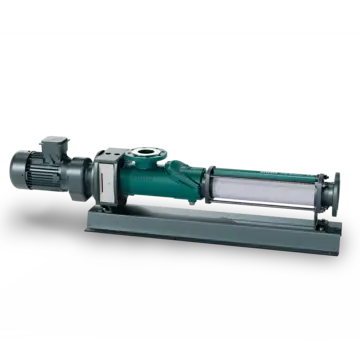
However, NETZSCH's pump system is powerful and reliable, allowing it to operate for a long time, providing a cost-effective solution.
The NEMO® progressing cavity pump can transfer even very thick slurries at low operational speeds, thus significantly reducing wear. It is suitable for the mining industry as it can easily handle big solids and withstand high pressure. NOTOS® multi screw pump is well prepared for working with different types of rock and that work tirelessly. Also, TORNADO® rotary lobe pump and PERIPRO peristaltic pump can successfully handle viscous slurries and liquids with high solids content.